About the use of hospital bed
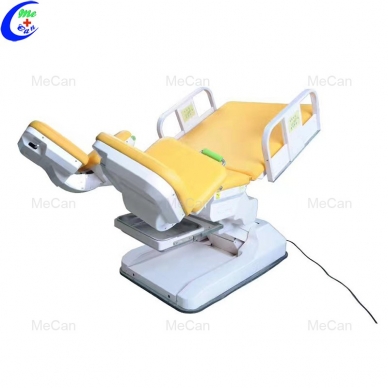
Electric Hospital Bed is a large, specially designed hospital bed built on a sturdy, metal and motorized adjustable height bed frame that allows the head, knee and foot segments to be adjusted, as well as enabling the entire bed to be lowered or raised by the touch of an easy – to – use handheld electronic control, which results in an anatomically correct sleep surface for each unique user [1].
The most important benefits of Electric hospital bed:
1. Electronically Back Raise motion and Knee Raise motion:
Beds can be raised and lowered at the head, feet, and their entire height. This feature is electronic.
Especially for patients that have back problems, difficulty breathing, or problems with mobility, being able to change the elevation of head or feet can make the patient feel more comfortable. Having the capability to adjust the head gives the patient the ability to eat meals, read, and watch TV.

2. Half-length Side railings:
The Half Length Hospital Bed Rail provides safety for elderly patients or individuals suffering from mental disabilities. It is ideal for raised beds, and offers great patient protection without the sense of entrapment full-length bed rail may cause.
The Half Length Hospital Bed Rail fits most beds with a steel frame, and is simple for anyone to install. It is constructed from one-inch steel, and features an attractive brown vein finish. The rail features seamless curved edges that won't catch on fabric or injure patients, and chrome bars allow for scratch-free movement of adjustment bracket.
Medical Advantages of Railing in Electric Hospital beds:
The Half Length Hospital Bed Rail keeps mentally and physically ill patients safe, while providing peace of mind for nurses and caregivers. The half-length design complies with FDA requirements, while still providing enough of a barrier to prevent patients from rolling or climbing out of bed.
The Half Length Hospital Bed Rail is designed particularly for raised beds that present more of a risk for patients. It is ideal for patients with limited cognizance or memory loss conditions, such as Alzheimer's, as it prevents them from getting out of bed and wandering during the night. It is also ideal for individuals with partial paralysis or muscular dystrophy, as they could potentially roll out of bed and not be able to get back in.
3. ABS platform with ventilation holes:
Home-care Bed's frame is made of steel and the mattress platform is made of ABS plastic which has ventilation holes. It has great strength, large air – bleed hole design, well ventilated.
Head and Foot Board are Removable. The boards are made of ABS plastic, allowing for easy removal when in an emergency.
There are stoppers around the mattress platform and I.V pole holders are available in the electric bed.
4. Low Voltage motor system with battery back – up with Remote Handset.
This Electric bed typically use low voltage motors to control and elevate the profiling lying surface of the bed and adjust the height of bed.
This is done by a small handset which is used to control independent low voltage motors integrated into the bed’s undercarriage. The remote handset is with night vision so that the caregiver can handle it throughout the day.
5. Adjustable bed height
The electric bed can be adjusted to a number of different positions using a profiling lying surface, which can commonly incline the upper body and raise the lower body independently of each other.
Having the ability to raise and lower the overall height of the bed gives the caregiver and patient flexibility that can aid in certain circumstances. For patients who have trouble sitting down from a standing position, being able to adjust the bed to the desired height is a great benefit. For care givers, raising the bed to a height that is comfortable to work can alleviate backaches.
6. Ease of moving:
Because electric hospital beds are on wheels, it makes it much easier to move the bed to different locations if needed. Regular beds require much more effort to be moved. Electric Hospital beds give the ability to push the bed to different parts of a room to give room for wheelchairs, commodes, and a variety of medical equipment.
7. Infinity variable tilt (Trendelenburg) and Reverse tilt positioning (Reverse Trendelenburg):
In the Trendelenburg position, the body is laid supine, or flat on the back with the feet higher than the head by 15-30 degrees.
The reverse Trendelenburg position similarly has the body flat, but the head is 15-30 degrees higher than the feet.
Advantages of Trendelenburg position in different clinical conditions
· The Trendelenburg position is used frequently in surgery, especially of the abdomen and genitourinary system. It allows better access to the pelvic organs as gravity pulls the intra-abdominal organs away from the pelvis.
· Despite the lack of evidence to support it, the Trendelenburg position is often used for patients in hypovolemic shock, with the goal of maintaining blood flow to the brain [2].
· The Trendelenburg position is helpful in surgical reduction of an abdominal hernia [3].
· The Trendelenburg position can also be used in respiratory patients to create better perfusion [4].
The First Auto Non-mydriatic Fundus Camera Made In China
The First Day In MEDIC EAST AFRICA 2018
Related Article